

1. Introduction
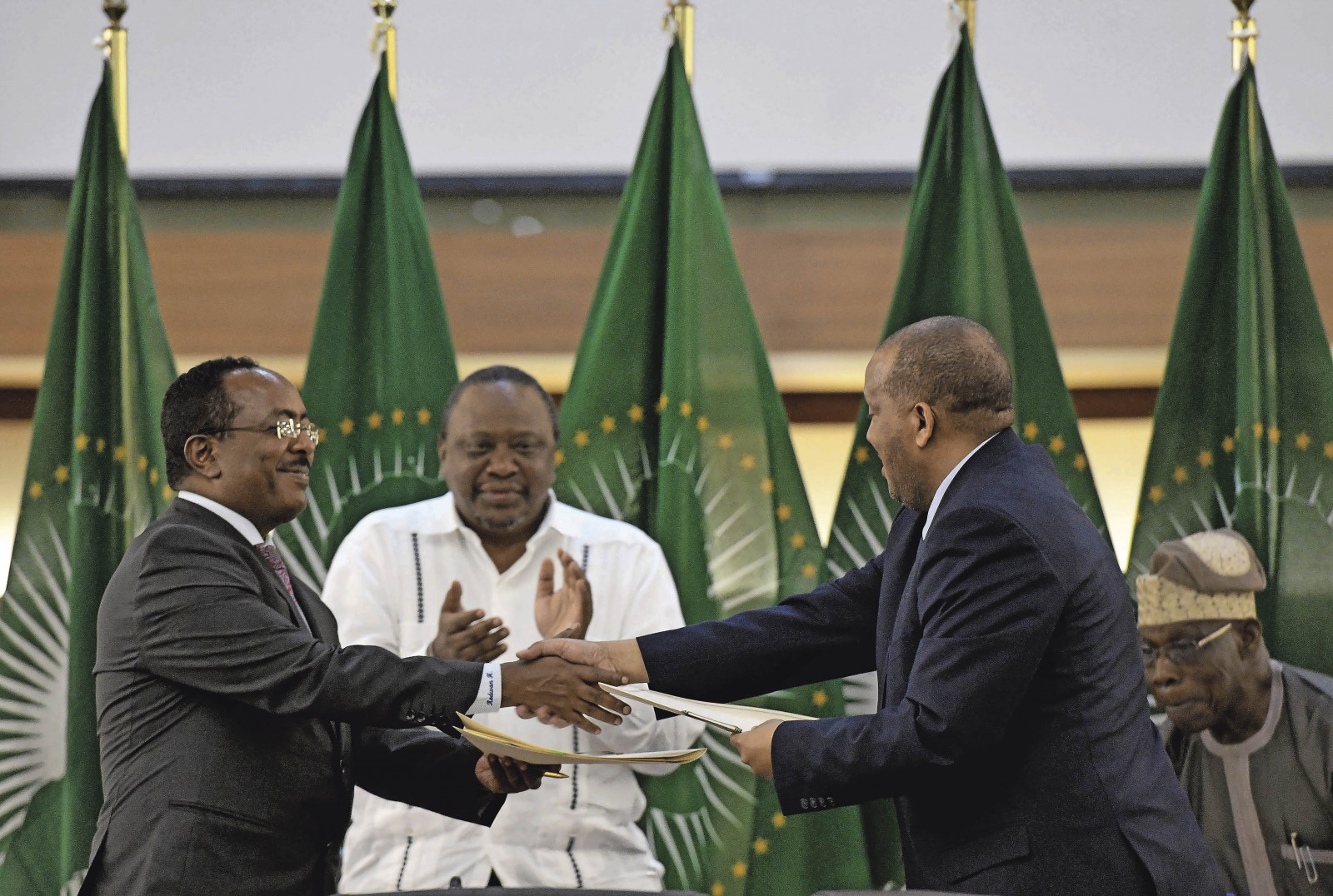
Though it has now been three years and three months since the signing of the Permanent Cessation of Hostilities Agreement (CoHA) in Pretoria in November 2022—presented as the end of the genocidal war of the 21st century—it has not translated into sustainable peace for the people of Tigray. Despite its many deficiencies, the agreement was widely welcomed. Depending on their political positions, including some academics who described it as a “new era” (Fana and Yonas, 2023), and political parties that either endorsed it or chose not to oppose it, there was a shared hope that it would at least bring an end to the horrendous atrocity crimes committed by Eritrean, Ethiopian, and Amhara forces against Tigrayans.
Yet the agreement has not progressed beyond the mere “silencing of the guns” toward a meaningful political settlement and lasting peace. The shortcomings of the Pretoria Agreement stem from several interrelated factors: deficiencies within the document itself; Ethiopia’s entrenched zero-sum political culture; the Ethiopian regime’s deliberate strategy of managed instability; intraparty politics and fragmentation within the Tigray People’s Liberation Front (TPLF); and the destabilizing role of the Eritrean regime. Moreover, there appears to be little genuine commitment among key actors to move beyond the current status quo. Fear of accountability on all sides, coupled with political expediency, has left the population powerless while political elites pursue their individual and group interests.
While the agreement has largely halted active shelling in parts of the region, it has done so without accountability or justice. As some observers argue (Mulugeta, 2024), it has effectively become an instrument for advancing the objectives of the war by other means. Key provisions—including the restoration of Tigray’s administrative territory, the return of internally displaced persons (IDPs), disarmament, demobilization, and reintegration (DDR), transitional justice, the resumption of humanitarian assistance, and post-conflict recovery and rehabilitation—have been stalled or undermined in various ways. Consequently, Tigray remains in a state of limbo. There is no clear roadmap toward political normalization, nor have effective implementation mechanisms been established.
2. The Illusion of the Pretoria Agreement
The Pretoria Agreement was less a roadmap for peace and more a tactical pause. While it halted large-scale conventional warfare, the structural causes and drivers of the genocide remain unaddressed. No meaningful political dialogue has taken place between the signatories since its signing. Reports estimate that between 600,000 and 800,000 people were killed, according to the African Union–led mediator Olusegun Obasanjo and the European Union High Representative for Foreign Affairs, Josep Borrell (Financial Times, Jan. 15, 2023; El País, International, Jan. 27, 2023). Millions remain displaced, scattered across Tigray, Sudan, and elsewhere. These are not merely numbers; they represent the shattered dreams and futures of countless innocent Tigrayans. Yet no one has been held accountable, and there is little hope for justice. Despite ample evidence of human rights violations and mass atrocities, the international community has failed to take decisive action to address the crisis in Tigray.
Among other factors, the failure of the CoHA is rooted in Ethiopia’s political culture, which has historically rejected positive-sum outcomes. The prevailing model is winner-takes-all politics, leaving little room for a win-win approach. Both the federal government and the TPLF leadership entered negotiations not out of a genuine commitment to reconciliation, but due to mutual exhaustion and external pressure from the United States and the European Union. As a result, the agreement functioned more as a mechanism to “buy time” than to resolve the structural causes of the crisis. The federal government has since continued to manipulate the political situation in Tigray to serve its own interests.
3. The Abiy Regime’s Strategy: Remote Instabilities and Proxy Forces
The federal government’s stated commitment to the CoHA is fundamentally contradicted by its actions on the ground and by the increasingly hostile rhetoric now emerging. Developments on the ground suggest a strategy aimed at the permanent weakening of Tigray, keeping the region in a state of ongoing economic and security fragility. Among the key indicators is the federal government’s support for armed and hostile groups such as the Amhara-affiliated “Tekeze Zeb” in Western Tigray, which signals an intent to undermine and dismantle Tigray’s territorial integrity. Although the exact relationship between the federal government and the “Tigray Peace Force,” based in the Afar region, remains unclear, such a force could not operate without the knowledge and support of the regime in Addis Ababa. This, too, reflects how the federal government exploits instability in Tigray for its own purposes.
Moreover, institutional sabotage—through the withholding of constitutional budgets and salaries, restrictions on the movement of goods and services, manipulation of the National Election Board to inflame local divisions, bureaucratic obstruction, and sustained propaganda—has effectively institutionalized the marginalization of Tigray and Tigrayans.
Despite the CoHA’s provision to restore constitutional order, Western Tigray in its entirety, along with parts of southern, eastern, northwestern, and central Tigray, remains under the occupation of Amhara forces and Eritrean troops. This has facilitated ongoing ethnic cleansing and continues to prevent the return of millions of internally displaced persons (IDPs).
Overall, the absence of accountability for atrocities and the failure to initiate a transparent reconstruction process have created a climate of fear in which enforced disappearances, and party- or state-sanctioned detentions and killings, have become disturbingly normalized.
4. The TPLF Crisis
Internally, Tigray is suffering from a strategic leadership vacuum. The TPLF appears trapped in a binary dynamic, oscillating between alignment with the Abiy regime and reactive posturing against Asmara—often at the expense of broader Tigrayan national interests. Thus far, the TPLF has fragmented into three factions: Debretsion–TPLF, Getachew–Simret, and Guesh–Weledo. This fragmentation and polarization continue to deepen, steadily weakening Tigrayan unity.
The crisis has been compounded by the exclusion of intellectual capital and other relevant stakeholders, including political parties, from Tigrayan political life—at times even through the use of military apparatus against rivals. Political space in Tigray is increasingly structured around a de facto one-party sphere, operated through a politico-military coalition with little to no room for genuine civilian politics.
Although proactive solutions have been proposed by scholars and political actors—including the Global Society of Tigray Scholars (GSTS), as well as opposition parties such as Salsay Weyane Tigray (SaWeT) and the Tigray Independence Party (TIP)—these proposals have largely fallen on deaf ears and have been systematically ignored.
5. Eritrea’s Role
The Eritrean regime, in coalition with the Ethiopian government and Amhara forces, played a central role in the devastation of Tigray. For many years, Eritrea has used external military engagement in neighboring states as both a foreign policy strategy and a governance model for consolidating internal power. The regime appears to view itself as having a special prerogative to intervene in the internal affairs of its neighbors by hosting hostile groups, providing training, disseminating propaganda, and supplying arms.
It has systematically weakened Tigray, including through widespread looting and destruction of material resources. Eritrea was not a signatory to the Pretoria CoHA. While formally excluded from the agreement, it was also reportedly dissatisfied with the cessation of hostilities, which halted the war and prevented the total annihilation of Tigray. Following the ceasefire, the regime realigned its strategy and began exploiting the internal political turmoil within the TPLF to advance its own interests.
Although the Pretoria Agreement stipulated the withdrawal of non-ENDF forces from Tigray, Eritrean troops continue to control significant areas in the eastern, central, and northwestern parts of the region.
6. The Way Forward: Toward a National Consensus
The current trajectory risks the silent disintegration of Tigray and a slide into another round of conflict—both internally and with the federal government. To avert this, a shift from partisan politics to genuine political dialogue is essential. Religious leaders and civil society organizations in Tigray could play a constructive role by bringing together all political forces to form an inclusive transitional government within Tigray and establish a unified Tigrayan negotiating bloc vis-à-vis the federal government. All relevant stakeholders—including political parties, civic organizations, and religious institutions—can contribute positively to such an effort.
The recent initiative led by Abune Tesfaselassie of the Catholic Church of Adigrat could provide a platform for bridging divisions both within Tigray and between Tigray and the federal government, particularly with the support of regional and international actors. A unified Tigrayan bloc would be better positioned to renegotiate with the federal government in the original spirit of the Pretoria Agreement. This would require the immediate withdrawal of non-ENDF forces, including Amhara militias and Eritrean troops; the unconditional return of IDPs; an independent international investigation into the crimes committed in Tigray; and the facilitation of accountability and healing for victims.
International and regional actors such as the EU, the United States, and the African Union can also play a constructive role by bringing the parties into dialogue, establishing confidence-building mechanisms, and applying pressure—particularly on the federal government—to cease arming hostile proxies such as Tekeze Zeb and to dismantle the illegal administration in Western Tigray. Peace cannot be built while the state actively manipulates internal crises and sponsors the subversion of its own territory.
7. Conclusion
The CoHA did not deliver the hoped-for outcomes or sustainable peace because the parties approached it with different motives, seeking to maximize their individual and group interests rather than prioritize the well-being of the people. If the federal government continues to weaponize Tigray’s internal weaknesses, and if the TPLF continues to prioritize its own political dominance, Tigray will remain in a fragile and volatile condition.
Only a unified, transparent, and inclusive political process—grounded in genuine political settlement, trust, commitment, and reconciliation—can provide a viable path forward at all levels. Regional and international actors can play a constructive role if they apply meaningful pressure on the parties to engage in dialogue and work toward a comprehensive political settlement.
References
Mulugeta G. (2024). Towards a meaningful Peace for Tigray: How to move from the Permanent Cessation of Hostilities Agreement to a durable peace. World Peace Foundation
Fana G. and Yonas T (2023). The Pretoria Agreement: mere Cessation of Hostilities or heralding a new era in Ethiopia? Review of African Political Economy VoL 50, No. 175, 96-106