

Getachew Assefa
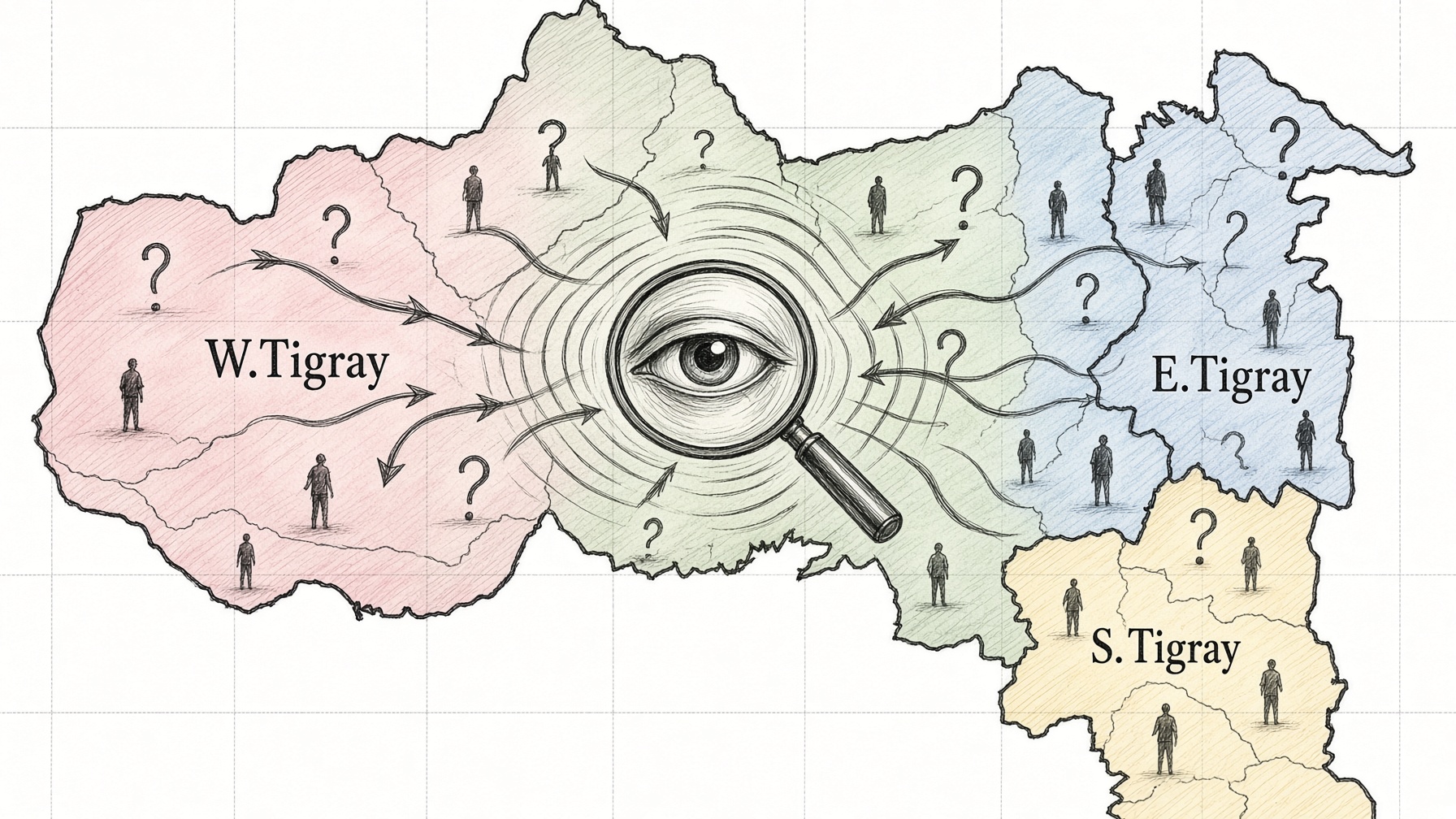
The Ethiopian federal government and its allied Tigray Peace Force (TPF) have made rapid territorial gains across Tigray. The speed of these advances raises questions beyond which side controls which town. Have Tigrayans abandoned the TPLF? Have they embraced the Prosperity Party (PP) or the TPF? Does the limited popular resistance to advancing forces reflect political acceptance, exhaustion, or something more complicated? My concern is that nearly every political actor, and the international community, risks interpreting these developments through its own interests and ambitions rather than the realities facing ordinary Tigrayans. The cost of reading Tigray wrong has already been devastating. Another misreading could prolong its suffering.
1. The people are exhausted by war, not necessarily embracing its latest victors
Tigrayans have endured mass killings, displacement, sexual violence, economic devastation, and the destruction of essential services. Nearly four years after the Pretoria Agreement, many fundamental grievances remain unresolved.
Renewed fighting has compounded their hardship. Families are struggling with insecurity, unpaid salaries, displacement, and uncertainty about tomorrow. People want peace, safety, functioning schools, healthcare, and opportunities to rebuild their lives. Many cannot afford another war, let alone choose freely who will administer their towns amid military confrontation. Their response to advancing forces must be understood in this context.
A population exhausted by war may accept whoever exercises immediate authority to avoid further suffering. That does not establish political loyalty or approval. The absence of armed resistance is not evidence of popular consent. This is the central reality that every political actor must understand.
2. The TPLF politico-military oligarchy must recognize how much has changed
One of the most consequential developments since Pretoria, in my assessment, has been the growing public understanding of how the entrenched TPLF politico-military leadership has prioritized its own survival, privileges, and control.
The leadership had an opportunity to prioritize recovery, the return of displaced persons, political reform, and accountable governance. Instead, its continued concentration of power, restrictions on dissent, and increasingly troubling relationship with Eritrea’s ruling establishment, Shaebia, have raised serious questions about its priorities.
A leadership that built much of its legitimacy around resistance to Eritrean aggression now faces questions about its willingness to align with that same regime. Tigrayans can distinguish between defending their people and preserving the authority of those claiming to represent them.
The TPLF is not Tigray. The survival of its leadership is not the survival of the people. Historical sacrifice deserves recognition, but it does not confer permanent political authority. The leadership would be mistaken to interpret today’s developments solely as military setbacks while ignoring the erosion of public confidence that may have preceded them.
3. The Prosperity Party must not confuse territorial control with forgiveness
The federal government faces an equally dangerous temptation: interpreting military gains as evidence that Tigrayans have embraced the PP or forgotten the devastating genocidal war of 2020–2022. They have not forgotten the atrocities, displacement, destruction, or the roles played by federal forces and their allies. Nor have they seen sufficient evidence of a fundamental change in the PP’s intentions toward Tigray. The unresolved return of displaced persons, territorial restoration, accountability for wartime atrocities, and threats to meaningful self-government remain central grievances.
Rejecting the TPLF oligarchy does not mean embracing the Prosperity Party. Opposing another war does not mean forgiving the previous one. The federal government must therefore resist imposing an administration simply because it now possesses military leverage. Appointing selected Tigrayans to public office does not automatically make an administration representative.
If Addis Ababa genuinely seeks peace in Tigray, it must demonstrate this through civilian protection, justice, restoration of services, the safe return of displaced persons, territorial restoration, and respect for the people’s right to determine their government. Military victory cannot substitute for political legitimacy.
4. Opposition parties must not overestimate their mandate or capacity
Tigray’s opposition parties have long criticized the TPLF’s political monopoly. Their demands for pluralism, institutional reform, and accountable government may resonate with many Tigrayans. But they should not interpret the weakening of the TPLF as proof that the people have chosen them. The people are not necessarily choosing the opposition over the TPLF. At least not yet.
Opposition parties must be realistic about their organizational strength, administrative capacity, and actual public support. If offered positions in a new administration, they should not mistake federal appointments for popular legitimacy. Their opportunity lies in demonstrating political maturity: building trust, defending pluralism, developing credible governance capacity, and placing public welfare above competition for office. Tigray needs an alternative system of governance, not merely alternative personalities occupying the same positions of power.
5. The Tigray Peace Force must prove its commitment to the people
The TPF faces a particularly sensitive test. Some Tigrayans view it as an alternative to the entrenched TPLF leadership. Others regard its alliance with federal forces as unacceptable given the suffering inflicted during the previous war. Neither perspective can be settled by military advances. What matters now is how the TPF conducts itself.
Will it protect civilians regardless of political affiliation? Prevent revenge attacks, arbitrary detention, looting, and intimidation? Respect the rights of TPLF supporters? Accept civilian oversight? Its credibility will depend on its actions rather than its military achievements. The name Peace Force must be a responsibility, not a claim to political entitlement.
6. The media must stop forcing today’s Tigray into yesterday’s narratives
Today’s political and military circumstances in Tigray are not identical to those of the 2020–2022 popular resistance. The population’s experiences, expectations, and perceptions of political leadership have changed. Yet some media outlets continue to portray the current conflict as a straightforward continuation of that earlier resistance, without seriously examining these changes. Others celebrate federal military advances as proof of popular support for the PP or TPF.
Both narratives go beyond what battlefield developments alone can establish. A military withdrawal, the fall of a town, or the absence of civilian resistance cannot reveal the political preferences of an entire population.The media must distinguish verifiable facts from speculation and partisan interpretation. Journalism should explain developments, not manufacture public consent or preserve political myths. Those who knowingly spread falsehoods to serve their preferred political camp are doing the public a disservice at a particularly dangerous moment.
7. The international community must look beyond military stabilization
International actors should not interpret changes in territorial control as the resolution of Tigray’s crisis. The underlying grievances remain: displacement, territorial restoration, accountability for atrocities, economic devastation, and the absence of credible, representative governance.
A new administration may restore some order, but without legitimacy, justice, and meaningful public participation, temporary stability could conceal the conditions for future conflict. The international community should support civilian protection, humanitarian recovery, and an inclusive political transition rather than merely endorse whichever arrangement emerges from the latest military developments.
8. Tigray is not a prize for the victorious
Behind these competing misreadings lies a common assumption: whoever gains control of Tigray’s institutions acquires the right to determine its future.
The TPLF leadership has relied on historical legitimacy. The federal government may rely on military control. The TPF may invoke its role in defeating the existing establishment. Opposition parties may regard the resulting political vacuum as their opportunity. But Tigray belongs to none of these organizations. It belongs to its people. Their political rights do not depend on who controls their towns, which party they support, or which armed organization claims to represent them. The right to govern must come from the governed.
9. What should happen now?
The immediate priority is not celebrating one camp’s victory or another’s defeat. It is protecting the population and preventing another political transition from being captured by a privileged few.
Five priorities are essential:
- Civilian protection: prevent revenge attacks, arbitrary detention, forced recruitment, collective punishment, and political intimidation by any armed force.
- Restoration of normal life: reopen schools, hospitals, banks, and public services; pay salaries; ensure humanitarian access; and revive livelihoods.
- Inclusive transitional administration: establish a credible, civilian-led, time-bound arrangement through genuine public consultation, not appointments imposed by Addis Ababa or armed organizations.
- Justice and accountability: address wartime atrocities and ongoing abuses without selective justice or political exemptions.
- Genuine self-government: restore political freedoms, facilitate the lawful resolution of territorial questions, and create conditions for credible elections.
These are not concessions to be negotiated among political elites. They are obligations owed to the people.
10. The real test is not who defeats the oligarchy, but what replaces it
I have argued before that the litmus test for Tigray’s future is not whether the TPLF politico-military oligarchy is successfully removed. The real test is whether ordinary people gain greater freedom, security, dignity, and control over their lives. Can they criticize those in power without fear? Choose their representatives? Demand accountability? Return to their homes? Pursue decent livelihoods? Govern themselves without coercion from Mekelle or Addis Ababa? If one privileged political-military establishment simply replaces another, the underlying problem remains.
Tigray needs a change in the relationship between the people and those who exercise power, not merely a change in who holds that power.
Conclusion: Listen to the people
The rapid military developments in Tigray may mark a significant turning point. Their political meaning, however, remains unsettled.
The TPLF leadership must recognize that historical sacrifice does not guarantee permanent loyalty. The PP must understand that military advances do not erase past atrocities. Opposition parties must earn public trust rather than assume it. The TPF must demonstrate its commitment to peace through its conduct. And the media must stop turning partisan interpretations into supposed facts.
The people of Tigray are not a constituency to be claimed by whichever political or military organization gains the upper hand. They are citizens with their own judgments, memories, aspirations, and rights. Their exhaustion is not surrender. Their rejection of an oligarchy is not an endorsement of its opponents. Their desire for peace is not forgiveness for past atrocities. And their silence under armed power is not consent. The opportunity before Tigray is not simply to replace one political establishment with another. It is to end the cycle in which ordinary people sacrifice everything while a privileged few compete for power.
The cost of reading Tigray wrong has already been extraordinarily high. Tigray does not need another victor claiming ownership of its future. It needs peace with justice, security with dignity, and self-government by the people, for the people, and accountable to the people.