UMD MEDIA REPORT
Is Another War Coming? [#TPLF](https://www.facebook.com/hashtag/tplf?__cft__[0]=AZgp8aZw-YmEc4XSOlwXDnhyhfRimILwZzWsZRJ6KS0sOcphgoMCayNZsXnat-fBaFmTSuqd8j21T19n0vlEz5cbi9mq_bYtxep2V3hByWTMYg7kul2h0t8SnUu5tr1fUbtO1keExxiAQDGeYsjYJ4fQbfmbF2DUyGx6pBWW2A5RnZA1uL2RKqGqRPtlvMG17G3hXWkYCvKR9dWG8fDK3SKHs0q0UHslyFOlpz04UD8kToqRy8AV5Av_-P0&__tn__=*NK-y-R) Forums Signal a Dangerous Escalation as Diplomatic Avenues Narrow
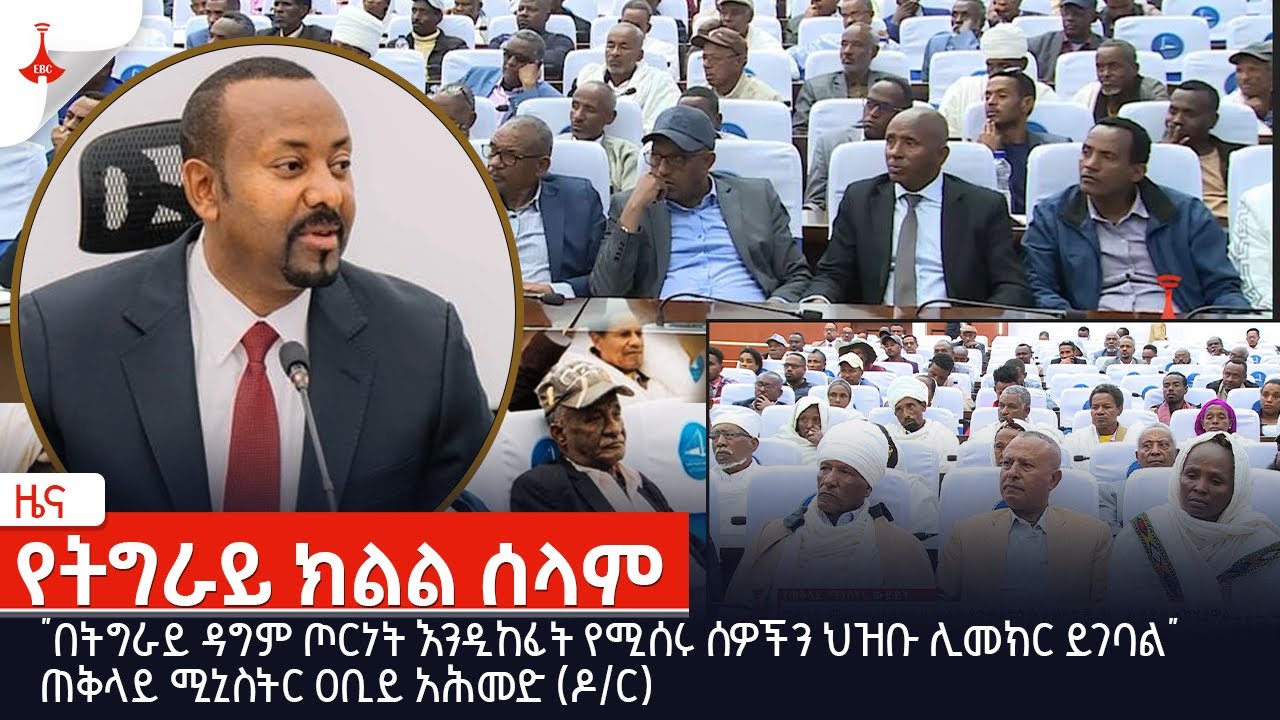
Since Sunday, July 19, 2026, the Tigray People’s Liberation Front (TPLF) has carried out an extensive and highly coordinated series of public forums across Tigray, led by members of its Politburo and Central Committee. Covering cities and districts in all parts of the region, the campaign has reached communities across Tigray through a dense schedule of meetings. General public forums began on Sunday and continued in some areas on Monday. Regional youth forums expanded on Tuesday and Wednesday, while parallel sessions involving civil servants, religious leaders, internally displaced persons (IDPs), and other segments of society took place on Wednesday and Thursday.
By the time of publication, UMD Media had counted 72 separate forums over a five-day period based on reports published on the TPLF’s official Facebook page, underscoring the geographic reach, scale, and intensity of the campaign.
The forums have been conducted under the slogan “ዘበት ንብሄራዊ ብርሰት!”, which can be translated as “Never to national destruction!” or, more naturally in context, “No surrender to national annihilation.”
Taken together, their geographical reach, carefully sequenced audiences, centrally distributed messages and increasingly militarized conclusions, the forums resemble a structured campaign to prepare public opinion, government institutions and the youth for confrontation.
This does not by itself prove that the TPLF has made a final decision to initiate war. It does, however, show that its leadership is deliberately creating the political and psychological conditions in which renewed armed conflict can be presented as unavoidable, defensive and nationally legitimate.
1. The Language of Burial, Victory and the End of Dialogue
The most alarming element is not merely that the TPLF is criticizing Prime Minister Abiy Ahmed or accusing the federal government of failing to implement the Pretoria Agreement which is factually accurate. Such accusations have been made repeatedly since the agreement was signed in November 2022.
What is different is the systematic use of language connecting Tigray’s survival to the destruction or “burial” of the Prosperity Party government.
Among the principal slogans repeated at the forums were:
“The national survival of the people of Tigray will be secured on the grave of the genocidal Prosperity regime.”
“Victory will be secured over the grave of our enemies.”
“The Prosperity regime must be buried for Tigray’s land and displaced people to be restored.”
“The time for peaceful dialogue has passed.”
The TPLF’s weekly message issued on Tuesday went considerably further than ordinary political condemnation. It stated that the people should strengthen the Tigray army “in manpower and logistics,” reconnect the rear with the front, defeat the federal government and build alliances with other forces confronting it.
It declared that the federal government had rejected peace, dialogue and negotiation and argued that Tigray had no remaining option other than strengthening its capabilities and defeating what it called the “genocidal regime.”
The organized campaign that repeatedly speaks of strengthening the army, joining the front and rear, defeating the government, supporting alliances with armed forces and achieving survival over the government’s grave is no longer simply a campaign for implementation of an agreement is all part of a vocabulary of mobilization.
2. The Pretoria Agreement Is Being Pronounced Dead
The November 2022 Pretoria Cessation of Hostilities Agreement stopped large-scale warfare but did not resolve many of its underlying causes. The return of displaced communities, the restoration of constitutional territories, the withdrawal of non-federal forces, political normalization, disarmament and accountability remained incomplete or disputed. A recent Rift Valley Institute assessment concluded that Pretoria halted the fighting but postponed rather than settled the conflict’s central political and territorial disputes.
The new forums appear designed to persuade the public that this diplomatic framework has now been exhausted. Fetlework Gebregziabher, the head of the TPLF Secretariat and currently the party’s most powerful leader, told a youth forum in Adigrat that the TPLF had attempted to address the agreement’s shortcomings through peaceful dialogue. She accused the federal government of violating the agreement, preparing another campaign against Tigray and seeking to complete what she described as an unfinished genocide. She characterized the current period as a turning point and told young people that they carry a “historic responsibility.”
TPLF Chairperson Debretsion Gebremichael, who assumed the presidency of the regional government following the removal of Lt. Gen. Tadesse Worede, delivered a similar message during the Mekelle forum. He argued that Tigray had exhausted peaceful avenues for addressing its demands but had instead been met with restrictions on fuel supplies, budget transfers, and government services, alongside continued drone threats and attacks. Based on this assessment, he concluded that the people of Tigray must now engage in a decisive struggle for their survival.
During the same forum, Debretsion said that the United States ambassador would come “tomorrow,” but suggested the visit would no longer be useful. The remark was an important signal: diplomacy was not merely described as unsuccessful but as increasingly irrelevant.
Public reporting had already indicated that senior TPLF figures considered the Pretoria framework to have collapsed, while federal authorities accused the organization of violating the agreement and preparing renewed conflict.
3. The Cancellation of the U.S. Ambassador’s Follow-up Visit
The ambassador had already visited Mekelle on July 15 for discussions on humanitarian assistance, peace, security and wider regional political developments. The cancellation of a planned follow-up visit would indicate that the TPLF forums had already generated diplomatic consequences and that Addis Ababa was interpreting them not merely as internal political consultations, but as a possible declaration of political hostility and preparation for confrontation.
This development also came during a week in which federal authorities intensified their own war-related messaging through state-aligned media. More than two dozen reports, editorials and propaganda pieces were published in state-run outlets, many of them framing Tigray and Eritrea as emerging security threats. Taken together, the volume and tone of the coverage appeared designed to prepare public opinion and build support for the possibility of renewed conflict with Tigray, Eritrea, or both.
This week’s development regarding Ambassador Massinga would be particularly serious because U.S. diplomatic engagement has been among the remaining channels through which both sides could be pressured to avoid escalation and return to the Pretoria framework.
4. Pressure Tactic or Final Preparation?
There are at least two major interpretations of the TPLF campaign.
The first is that the leadership is preparing Tigray for renewed war. The sequence of mass public forums, youth mobilization, meetings with civil servants, demands for logistical and human support to the army, references to alliances with armed groups and declarations that dialogue has failed all support this interpretation. The forums are also closely linked to Proclamation No. 366/2018, which was adopted in early June 2026 during a closed session of the reconvened TPLF Central Council and subsequently circulated to party structures for implementation. The proclamation was declared retroactively effective from November 3, 2020, the eve of the outbreak of the Tigray war, and establishes an extensive legal and administrative framework governing security, mobilization, political activity, and wartime conduct. It has drawn criticism from human rights observers and legal analysts because it significantly expands the powers of party and security structures, restricts political dissent, and criminalizes a broad range of conduct deemed to undermine the war effort or national security.
During the forums, Debretsion Gebremichael described the proclamation as a necessary instrument to safeguard the "existence and security" of the people of Tigray, presenting it as a wartime legal framework now moving from adoption to active implementation. In the current political context, this transition could translate into tighter internal controls, stronger enforcement against opposition to mobilization, and broader legal authority to facilitate recruitment and other wartime measures.
The second interpretation is that the TPLF leadership is using the threat of war to pressure Abiy Ahmed, discourage federal military action, restore diplomatic attention and strengthen its bargaining position on Western Tigray, displaced people, budgets and regional authority. Under this reading, the TPLF may believe that only the credible threat of armed escalation can force Addis Ababa and international actors to take its demands seriously.
The two explanations are not mutually exclusive. Political pressure based on military threats can gradually become actual preparation for war. Once a population is mobilized, opponents are described as traitors, diplomacy is declared useless and armed alliances are publicly discussed, the leadership may lose the ability to retreat without appearing weak.
Rhetoric intended as pressure can therefore create its own momentum.
5.Military Sources Question Tigray’s Capacity for War
Military sources in Tigray contacted by UMD Media offered a significantly different assessment from the political leadership’s public messaging. They described the forums as a desperate initiative driven by a small number of political leaders rather than an expression of a unified military decision. According to these sources, Tigray’s forces are not presently in a position to wage another large-scale war against the federal government. This assessment is important because political willingness and military capability are separate questions.
Tigray remains economically devastated. Its civilian population is exhausted, hundreds of thousands remain displaced, institutional structures are fractured, and the regional leadership is internally divided. A new war would require not only fighters but reliable command structures, weapons, fuel, transportation, communications, medical services, food and secure supply routes.
The TPLF’s own weekly statement acknowledged this weakness indirectly by emphasizing the need to strengthen the army through new personnel and logistics. That language may reflect preparation for war, but it may equally reveal that the capability required for war does not currently exist.
Military resistance to another war would therefore be a major constraint. Yet it should not be regarded as a guarantee of peace. Political leaders have previously launched wars under conditions in which military professionals considered the timing or balance of forces unfavourable.
6. The Eritrean Factor and the Buffer-State Theory
Another interpretation circulating among sources and political observers is that the campaign reflects the influence or strategic interests of Eritrea’s ruling party, commonly known as Shabia.
According to this view, Eritrea wants Tigray to sever its remaining political relationship with the Ethiopian federal system. A fully alienated and militarized Tigray could then serve as a buffer between Eritrea and any future Ethiopian military campaign directed toward the Red Sea or Eritrean territory.
Eritrean government-aligned propagandists had previously argued that the final institutional connection between Tigray and Ethiopia was the Pretoria Agreement and called for that “last string” to be broken. The present TPLF forums, which increasingly portray Pretoria as dead and the federal government as an enemy that must be buried, appear at least on the surface consistent with that objective of Isaias Afewerki of Eritrea.
This alleged connection is consequential. Relations between Ethiopia and Eritrea have deteriorated sharply, with the two governments exchanging accusations over military intentions, armed proxies, the Tigray war and Ethiopia’s ambitions concerning access to the Red Sea.
From Eritrea’s perspective, a Tigray permanently separated from Addis Ababa could block or complicate an Ethiopian advance northward. From Tigray’s perspective, however, becoming a battlefield or buffer between Addis Ababa and Asmara would be disastrous. Tigray could again be used to absorb the military, economic and human consequences of a conflict principally shaped by the strategic calculations of others.
7. Fetlework’s Reference to Oromo Liberation Army and Fano
At the Adigrat forum, Fetlework Gebregziabher said that, unlike during the previous war, the TPLF would now have the Oromo Liberation Army and Fano as allies in a possible march toward Addis Ababa. She claimed that both forces were already fighting near the capital Addis Ababa.
The statement is one of the clearest indications that the forums are not limited to defending Tigray’s existing territory or restoring constitutional territories. It invokes the political imagery of regime change in Addis Ababa and suggests coordination or at least an intended convergence with armed forces operating elsewhere in Ethiopia.
No publicly verified evidence currently establishes the existence of a formal military alliance among the TPLF, the Oromo Liberation Army (OLA), and Fano. UMD Media has, however, received information from sources indicating that representatives of the three groups held a meeting in Axum several weeks ago. UMD Media has not independently verified that information.
Moreover, the three movements pursue distinct and, in some respects, fundamentally conflicting political objectives. While they may at times share a common adversary, that alone does not constitute a coordinated military alliance or a unified political strategy.
The reference may therefore be aspirational, propagandistic or intended to convince participants that the federal government is isolated. But even as rhetoric, it expands the stated horizon from regional self-defence to a wider campaign against the federal government.
Adigrat’s location also gives the statement additional significance. It is Tigray’s second-largest city and the last major urban centre on the Mekelle–Asmara corridor, making it strategically important in any discussion of Tigray’s relationship with Eritrea.
8. Diaspora Media and the Intensification of War Messaging
Diaspora-based media organizations aligned with the TPLF, including Zara Media Network in the United States and Dedebit Media in Australia, have intensified campaigns portraying renewed armed struggle as necessary and inevitable.
Diaspora media can play a powerful role in transforming political messaging into moral pressure on people inside the conflict zone. Calls for sacrifice are easier to make from outside Tigray, where the immediate consequences of renewed war, death, displacement, hunger, conscription and destruction, will not primarily be borne.
The rhetoric is particularly dangerous when it portrays anyone questioning the timing, objectives or feasibility of war as a collaborator, traitor or agent of the enemy.
Several statements made during the forums condemned what speakers described as "traitors," "spies," and a so-called "group of national betrayal." Some participants also called for legal action against individuals inside Tigray whom they accused of obstructing the national struggle. Such rhetoric raises concerns that political dissent is increasingly being framed as betrayal rather than legitimate disagreement.
At the same time, media outlets aligned with the TPLF, including Zara Media Network, have intensified campaigns portraying Tigrayan political figures and ordinary civilians who relocated from Tigray to Addis Ababa out of concern for their safety as potential collaborators with the federal government. Some reports have gone further, alleging that the TPLF has established clandestine "army cells" in Addis Ababa, while simultaneously suggesting that Tigrayans living outside the region are under suspicion.
When asked about these narratives, a well-placed source told UMD Media that the campaign serves two strategic objectives. First, it is intended to discourage Tigrayans from leaving the region to avoid forced conscription by creating fear that they could be arrested or otherwise targeted outside Tigray. Second, according to the source, it seeks to encourage federal authorities to act against Tigrayans in Addis Ababa and elsewhere in Ethiopia whom the TPLF’s propaganda apparatus portrays as traitors or collaborators. UMD Media has not independently verified these claims.
This framing, however, converts a political debate over war and peace into a test of loyalty. It narrows the space for military professionals, civil society, religious authorities, opposition parties, parents and young people to question whether another war is necessary, achievable or in Tigray’s interest.
9. Internal Politics Behind the Campaign
The forums also serve an internal political purpose.
The TPLF faces deep criticism over forced recruitment, governance failures, corruption, restrictions on political space, and economic collapse. Its claim to speak for the whole of Tigray is increasingly contested by opposition parties, civil society actors and Tigrayans who distinguish the interests of the people from those of the party leadership.
By redefining the political moment as an existential confrontation with a genocidal external enemy, the TPLF can place internal criticism beyond legitimate debate. Demands for accountable government, inclusive administration and civilian protection can be dismissed as distractions or betrayal during a national emergency.
The forums therefore appear to perform three tasks simultaneously: exerting pressure on Addis Ababa, preparing the public for possible armed mobilization and restoring the TPLF’s internal political dominance.
10. Why War Is Not Yet Inevitable
Despite the severity of the rhetoric, a new war should not yet be treated as certain.
There is no independently confirmed evidence that Tigray’s forces have received a final operational order for a general offensive. Military sources consulted by UMD Media dispute the region’s readiness. The economic and logistical constraints are immense. If the federal government triggers another full-scale war in Tigray, it could expand into a wider confrontation involving Eritrea and armed movements in other parts of Ethiopia.
But the absence of a final order does not make the current situation less dangerous. Wars often begin not because every actor wants a full war, but because each side mobilizes to frighten or deter the other. One side’s “defensive preparation” becomes the other’s evidence of an imminent attack. Diplomatic channels weaken, military commanders move forces, and a local confrontation produces an escalation that political leaders can no longer control.
The present campaign adds a region-wide mobilization narrative to that unstable military environment.
11. The Most Likely Assessment
The available evidence does not yet justify stating that war has been formally decided or that an offensive has a fixed starting date. It does justify the conclusion that the TPLF has entered a deliberate phase of political and social mobilization for the possibility of war.
The campaign may still be intended principally to pressure Abiy Ahmed. But pressure is now being created through explicit threats of armed struggle, military reinforcement, internal discipline and alliances against the federal government. The distinction between signalling and preparation is therefore becoming dangerously thin.
The most plausible assessment is that the TPLF leadership is attempting to keep several options open: securing concessions through fear of war, consolidating internal control, preparing the population in case conflict becomes unavoidable and positioning itself within a broader anti-Abiy alignment. Whether this strategy leads to war will depend on the response of the federal government, the position of Tigray’s military commanders, Eritrea’s calculations and the willingness of international actors to intervene before the rhetoric becomes operational reality.
11. What Must Happen Now
The international community must not wait for the first major battlefield confrontation before acting.
The African Union, United States, European Union and other partners should demand an immediate end to public incitement and coercive mobilization by all sides. They should press the federal government and Tigray’s authorities to return to a clearly structured Pretoria implementation process addressing displaced people, territorial administration, constitutional order, humanitarian access, security arrangements and political normalization. The reported obstruction of Ambassador Massinga’s visit would be especially counterproductive. At precisely the moment when rhetoric is closing political space, diplomatic access should be expanded rather than restricted.
At the same time, peace cannot mean demanding silence from Tigray while leaving the core provisions of Pretoria unimplemented. The continued suffering of displaced people, territorial restoration, insecurity and the absence of meaningful accountability have helped produce the present crisis. Nor can the genuine grievances of the people of Tigray be used as a blank cheque for the TPLF to lead another generation into war without a transparent objective, realistic assessment, inclusive mandate or plan for protecting civilians.
The events of the past week also highlight why international actors should broaden their engagement beyond the TPLF when dealing with Tigray’s present crisis and long-term future. The four public appeals issued by Salsay Weyane Tigray this week, to the TPLF leadership, the Federal Government of Ethiopia, the people of Tigray, and the international community, illustrate that alternative political voices continue to exist despite operating in an increasingly constrained political environment. Whether one agrees with their proposals or not, these appeals demonstrate that Tigray is not politically monolithic and that sustainable peace cannot be built through engagement with a single political actor alone. Lasting stability will require an inclusive political process that incorporates opposition parties, civil society, religious institutions, women’s and youth organizations, professional associations, independent intellectuals, and representatives of internally displaced persons. A peace architecture built around a single dominant actor may produce short-term arrangements, but it is unlikely to generate the legitimacy and resilience needed for long-term recovery and democratic governance.
Even in the absence of renewed armed conflict, Tigray faces the prospect of a severe humanitarian emergency over the coming months and years. An emerging El Niño event threatens to compound Tigray’s already fragile recovery by increasing the likelihood of severe drought and below-average rainfall across much of the region. Regional assessments have identified 21 districts as facing extreme moisture stress and a further 16 as critically vulnerable. These climate risks come at a time when livelihoods remain severely weakened by years of conflict, displacement, and the destruction of agricultural infrastructure. With much of the rainy season already elapsed and many farms reportedly left unsown because of insecurity, displacement, and limited access to agricultural inputs, the region faces the prospect of another poor harvest. Even without renewed armed conflict, the combination of climate stress, reduced agricultural production, and prolonged humanitarian dependence could push Tigray into a prolonged food security crisis. A return to war under these conditions would not simply worsen an already dire humanitarian situation; it could prove catastrophic for a population whose resilience has already been severely eroded by years of conflict and economic devastation.
Tigray has already paid an unbearable price. Its people should not be forced to choose between federal coercion and another war promoted by TPLF leaders who present their own survival as identical to the survival of Tigray. The forums may or may not become the final harbinger of renewed war. But their language, scale and direction represent the clearest warning so far that whatever remained of the political infrastructure established after Pretoria is disappearing fast. The danger is no longer theoretical.
Originally published on UMD Media Facebook on 2026-07-23T09:00:00-06:00. Source: https://www.facebook.com/getachew.UMDMedia