In the first part of this report, UMD Media examined the increasingly confrontational conduct of the Tigray People’s Liberation Front since July 19, including public declarations that the Pretoria Agreement was effectively dead, inflammatory speeches, military mobilization, forced recruitment and rhetoric presenting another war as both unavoidable and desirable.
This second part examines the conduct of the other principal signatory to the Pretoria Agreement: the Ethiopian federal government led by the Prosperity Party.
The federal government presents itself as the defender of peace and portrays the TPLF as the sole source of the present danger. That portrayal leaves out a central part of the story. For nearly four years, the federal government has failed to fully implement some of the most consequential provisions of the Pretoria Agreement. It has not secured the withdrawal of all non-federal forces from Tigray, enabled the safe return of hundreds of thousands of internally displaced people, established a credible process of accountability, fully supported Tigray’s recovery or sustained the political dialogue required to resolve the underlying disputes.
Instead of addressing these failures with urgency, the government is increasingly using its extensive state and party-controlled media system to present the crisis primarily as another security confrontation with the TPLF. The result is a dangerous substitution: propaganda in place of implementation, accusation in place of dialogue and preparation for another military confrontation in place of completing the peace.
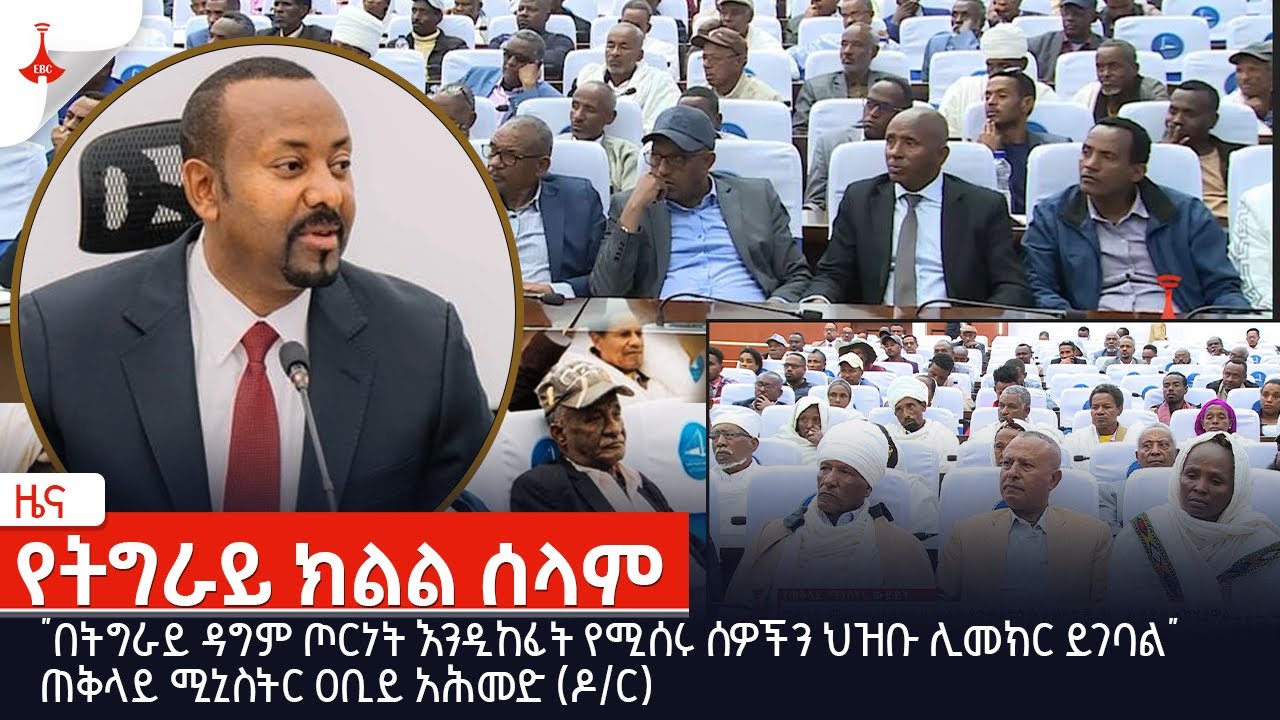
1. State Media’s Seven-Day War Propaganda Campaign: Forty-Four Videos on Just Three Channels
During those seven days, UMD Media counted:
– 15 videos broadcast through the Ethiopian Broadcasting Corporation, or EBC;
– 17 videos through Fana Broadcasting Corporate; and
– 12 videos through the Ethiopian News Agency, or ENA.
That amounts to 44 direct YouTube videos published over seven days that UMD Media categorized as war propaganda, conflict escalation, hostile political framing, or messaging directed against the TPLF and the authorities in Tigray. This count includes only videos explicitly devoted to these themes. It does not capture similar messaging embedded in regular news coverage or other programming. The actual number, and the overall volume of such content, could therefore be considerably higher.
And this count is limited to YouTube clips published by these three media organizations. It does not include television and radio broadcasts that were not separately uploaded, regional state media, Prosperity Party media structures, government-friendly private outlets, newspapers, websites, social-media accounts, affiliated commentators or coordinated appearances by federal and regional officials. The actual reach and volume of the campaign are therefore considerably larger than the 44 videos documented in this limited sample.
Fana’s recent coverage, for example, has described the TPLF as a “defunct” organization pursuing renewed conflict and while presenting the federal government as a stabilizing force and gives zero attention to unresolved federal obligations under the Pretoria Agreement.
The problem is not that federal media should refrain from reporting forced recruitment, threatening statements or other abuses by the TPLF. Those matters are legitimate subjects of reporting. Human Rights Watch has documented the forcible and unlawful recruitment of civilians, including children, by Tigrayan authorities since at least April 2026. Such violations should be exposed and stopped. The problem is the systematic use of an enormous state-controlled media infrastructure to construct a one-sided narrative in which the government is portrayed as having fulfilled its responsibilities, while every unresolved question is attributed to the TPLF.
A government genuinely committed to preventing war would use its media power to explain the peace agreement, promote restraint, prepare displaced people for a safe return, support dialogue and tell the public what each party must do. Instead, its dominant message increasingly appears designed to convince the Ethiopian public that another confrontation is being forced upon the government and that responsibility lies entirely in Tigray.
This is how populations are psychologically prepared for war.
2. The Pretoria Agreement Was More Than a Ceasefire
The Pretoria Agreement, signed on November 2, 2022, was not merely an arrangement to stop active battlefield fighting. It established commitments concerning the permanent cessation of hostilities, restoration of federal authority, restoration of constitutional territory, humanitarian access, disarmament, protection of civilians, political dialogue, transitional arrangements and the resolution of outstanding political and territorial questions.
Its greatest achievement was stopping large-scale warfare. That achievement must not be minimized. The agreement saved lives, restored services and created an opportunity for recovery. But stopping the shooting was supposed to be the beginning of the peace process, not its conclusion. The Rift Valley Institute’s March 2026 assessment concluded that the agreement halted large-scale fighting but postponed rather than resolved the conflict’s underlying causes. It identified continuing disputes involving territory, political legitimacy, armed factions and the relationship between the federal government and Tigray’s authorities.
The federal government frequently points to the absence of full-scale war after November 2022 as proof of successful implementation. But the real test is whether the conditions that produced the war have been removed and whether its victims have been allowed to rebuild their lives.
By that measure, implementation remains largelyprofoundly incomplete.
3. The Failure to Restore Constitutional Territories and Return Displaced Tigrayans
Among the clearest failures is the continued displacement of hundreds of thousands of Tigrayans from Western Tigray and other occupied areas.
The federal government previously announced that displaced residents would return and that the territorial dispute would eventually be handled through constitutional procedures, including a possible referendum. Yet no credible timetable was established, the necessary security conditions were not created and the promised return did not occur on the required scale.
Human Rights Watch reported in April 2026 that ethnic Tigrayans in Western Tigray continued to face arbitrary detention, restrictions on movement, denial of employment and limited access to essential services. These continuing abuses were forcing additional people to flee nearly four years after the signing of the ceasefire agreement.
Human Rights Watch cited International Organization for Migration information indicating that most displaced people living under precarious conditions in central Tigray originated from Western Tigray. It placed the number of displaced people from the area at more than 740,000.
These people are not an abstract territorial issue. They are families living in schools, camps and temporary shelters. Many have lost their homes, farms, businesses, relatives and livelihoods. Their prolonged displacement has produced hunger, dependency, interrupted education, and deep psychological suffering and death.
A federal government committed to implementation would have placed their safe, voluntary and dignified return at the centre of national policy. It would have established an internationally supported return mechanism, provided security guarantees, removed non-ENDF forces, removed abusive local structures, restored property rights and regularly reported progress to the public. Instead, the displacement has been allowed to become normalized.
The government now devotes substantial media resources to condemning the TPLF’s recent conduct while ignoring why hundreds of thousands of Ethiopian citizens remain unable to return to their homes almost four years after the peace agreement.
4. The Continued Presence of Eritrean Forces
The agreement required the removal of foreign forces from Ethiopian territory. Yet credible international reporting has repeatedly documented the continued presence of Eritrean forces in parts of Tigray after the agreement.
The UN International Commission of Human Rights Experts on Ethiopia (ICHREE) found that Eritrean forces remained in Tigray after the cessation of hostilities and continued committing abuses, sometimes near Ethiopian federal forces. The commission stated that Ethiopia had failed in its duty to protect its population from violations by an external force.
Human Rights Watch reported that Eritrean forces remained in Tigray throughout 2024, where allegations included rape, sexual violence, disappearances and looting. Its 2026 Ethiopia report stated that Eritrean troops continued committing sexual violence in occupied areas and that Tigrayans continued to be forcibly displaced from Western Tigray despite the cessation agreement.
The federal government has neither transparently acknowledged the full extent of the Eritrean military presence nor demonstrated that it has secured a comprehensive withdrawal. This is not a secondary matter. It goes directly to sovereignty, civilian protection, territorial integrity and the credibility of the federal government’s claim that the agreement has been implemented.
The federal government demands the disarmament and political compliance of the TPLF while failing to demonstrate that armed forces allied with it during the war have withdrawn from all parts of Tigray. This sequencing has damaged trust and provided the TPLF with a powerful argument for resisting complete demobilization.
Instead of prioritizing the restoration of Tigray’s constitutionally recognized territory to its pre-November 2020 administrative status and creating the conditions for the safe and dignified return of hundreds of thousands of internally displaced Tigrayans, the federal government has instead been accused of reinforcing the new security and political order in occupied Western Tigray. Human Rights Watch reported that authorities in the area have, since 2024, organized and trained militias known as the Tekeze Zeb (Tekeze Guard) to defend their control of the territory. The organization further noted that these militias were mobilized as tensions increased over the unresolved status of Western Tigray and the return of displaced persons. Other independent analyses have similarly warned that the continued strengthening of armed groups in the disputed territory, rather than implementing the Pretoria Agreement’s commitment to resolve territorial issues through constitutional means and facilitate the return of displaced civilians, has further undermined confidence in the peace process and increased the risk of renewed conflict.
That does not justify the TPLF’s forced recruitment, renewed militarization or threats of war. It does, however, help explain why a peace process based on reciprocal obligations has steadily deteriorated.
5. No Credible Accountability for Atrocities
Another major failure has been the absence of credible, independent and victim-centred accountability.
The war involved violations by all major belligerents. Ethiopian federal forces, Eritrean forces, Amhara regional forces and associated militias, as well as Tigrayan forces, have been accused of war crimes and serious abuses.
ICHREE documented mass killings, widespread and systematic rape, sexual violence, deliberate starvation, forced displacement and large-scale arbitrary detention. It concluded that war crimes and crimes against humanity had been committed.
Yet the Ethiopian government opposed the continuation of the independent UN investigation and promoted its own transitional justice process despite profound concerns about institutional independence, access to evidence and the government’s willingness to investigate senior officials and allied foreign forces.
ICHREE warned that the prospects for meaningful domestic accountability were extremely remote. It also concluded that the likelihood of accountability for atrocities committed by Eritrean forces was virtually nonexistent.
A genuine peace process would have treated justice not as a threat to national sovereignty but as protection against renewed violence. Instead, victims have been asked to accept peace without truth, reconciliation without acknowledgment and national unity without credible accountability.
The federal government’s media outlets now speak extensively about new threats from Tigray while giving far less attention to the survivors of massacres, sexual violence, starvation and forced displacement who are still waiting for justice, medical treatment, rehabilitation and recognition. The absence of accountability has not stabilized Ethiopia. It has reinforced the belief that military and political power determine whose suffering is acknowledged and whose crimes are investigated.
6. No Reconstruction, No Serious National Commitment
Tigray emerged from the war with devastated hospitals, universities, schools, factories, farms, water systems, roads and public institutions. Families lost savings, livestock and productive assets accumulated over generations.
A serious postwar settlement required a nationally led reconstruction program proportionate to the scale of destruction. It required transparent damage assessment, federal budgetary commitments, international financing, restoration of public institutions and special support for survivors of sexual violence, displaced families, persons with disabilities and children whose education was interrupted.
Instead, reconstruction has not started while the humanitarian crisis has been treated as an aid-management problem rather than a national political obligation. By early 2026, reports described more than 750,000 people as still displaced, severe economic hardship, continuing hunger and essential infrastructure that had not recovered from the war.
The international humanitarian system has also faced severe funding shortages. But federal responsibility cannot be transferred entirely to international donors. Tigray is part of Ethiopia, and the rehabilitation of its people and institutions is an obligation of the Ethiopian state.
The government has found resources for military deployments, security operations, political campaigns and an expanding media apparatus. Its inability or unwillingness to mobilize comparable political energy for reconstruction sends a message about its priorities.
7. Political Engineering Instead of Inclusive Dialogue
The Pretoria Agreement required the establishment of an interim administration and political dialogue capable of addressing unresolved differences.
The federal government initially recognized an interim regional administration. However, its subsequent interventions in Tigray’s political divisions have frequently been perceived as attempts to weaken one faction, empower another and govern Tigray through competing centres of authority rather than build an inclusive and legitimate regional arrangement.
The federal government’s reported backing of the Tigray Peace Force, an armed group opposed to the TPLF, deepened this perception. The Rift Valley Institute reported that the faction emerged in 2025 with tacit federal support and that its incursions from Afar contributed to armed clashes inside Tigray.
Supporting or tolerating one Tigrayan armed faction to counter another is not a peace implementation. It is proxy politics.
The same applies to the federal government’s handling of the TPLF’s legal status. The electoral board’s cancellation of the party’s registration prevented Tigray’s dominant political organization from participating in the June 2026 election. Whatever the TPLF’s democratic failures and internal repression, excluding it through administrative and legal measures without creating an agreed political transition risked reproducing the political conditions that preceded the 2020 war.
A durable solution required an inclusive political process involving the TPLF, other Tigrayan political parties, civil society, survivors, women, youth, displaced communities and independent professional associations.
Instead, both the federal government and the TPLF have continued to behave as though Tigray’s future should be negotiated primarily between armed and authoritarian elites.
8. Exclusion From the National Political Process
The federal government has repeatedly promoted its National Dialogue as the mechanism through which Ethiopia’s political problems will be resolved.
But a dialogue that excludes or inadequately represents Tigray, while also excluding major armed and political actors in Amhara and Oromia, cannot credibly be described as national or inclusive.
Tigray was again absent from Ethiopia’s June 2026 national election, leaving its population without normal representation in federal institutions. The political vacuum was not created solely by the TPLF. It was also the product of unresolved federal decisions about legal recognition, transitional governance, security, territorial control and electoral participation.
Rather than urgently negotiating a pathway to legitimate representation, the federal government allowed the exclusion to continue. This deprived ordinary Tigrayans of peaceful political avenues while strengthening the position of those who argue that only armed power produces political results in Ethiopia.
9. Selective Sovereignty and Selective Law Enforcement
The federal government insists that the TPLF must comply fully with federal law and surrender independent military power. In principle, no political party should maintain an army or forcibly recruit civilians.
But the credibility of that demand is weakened when the federal government applies sovereignty and law selectively.
It has not ensured the departure of Eritrean forces from all Ethiopian territory. It has not secured the return of displaced Tigrayans and restoration of constitutional territory of Tigray. It has tolerated or supported competing armed factions when they served federal political objectives. It has failed to establish credible accountability for federal and allied forces. It has also prosecuted wars and extensive security operations in Amhara and Oromia while presenting itself as the country’s principal guardian of peace.
The law cannot become absolute when applied to political opponents and negotiable when applied to government allies. Peace cannot be built on a hierarchy in which one party’s violations are continuously broadcast while the other party’s unfulfilled obligations are erased.
10. The Dangerous Function of the Current Media Campaign
The present media campaign appears to serve several related purposes.
First, it separates the current crisis from the incomplete implementation of the Pretoria Agreement. Viewers are encouraged to see the situation as a new and unprovoked TPLF threat rather than the deterioration of an unfinished peace process.
Second, it converts legitimate public opposition by Tigrayans in and outside Tigray to forced recruitment by the TPLF into evidence supporting the federal government’s entire political narrative. Tigrayans who oppose the TPLF’s abuses are presented as though they necessarily endorse federal policy.
Third, it prepares the broader Ethiopian public to attribute all responsibility for any future confrontation to Tigray.
Fourth, it marginalizes advocates of negotiation by creating the impression that dialogue has already failed because one side is inherently committed to war.
Fifth, it can provide retrospective political justification should the federal government take military action.
The opposition party Ethiopian People’s Revolutionary Party in Addis Ababa publicly warned in July 2026 that the federal government was conducting a propaganda campaign designed to prepare public opinion psychologically for another war in Tigray. That warning deserves serious attention, particularly in a country where media dehumanization, disinformation and mobilizing rhetoric preceded and accompanied a war of extraordinary brutality.
The federal government knows the consequences of such messaging. Its leaders, institutions and media organizations used witnessed the same how public language to helped make mass violence against Tigrayans politically acceptable between 2020 and 2022.
The federal government’s public messaging before and during the Tigray war cannot be separated from the suffering that followed. Numerous international investigations documented not only widespread atrocities but also a pattern of dehumanizing and inflammatory rhetoric directed at Tigrayans. In its landmark 2024 report, Genocide in Tigray: Serious Breaches of International Law in the Tigray Conflict, Ethiopia, and Paths to Accountability, the New Lines Institute concluded that there is a reasonable basis to believe genocide was committed against Tigrayans by Ethiopian, Eritrean and allied forces. Importantly, the report also found a reasonable basis to believe that certain public statements and social media messages amounted to direct and public incitement to commit genocide, emphasizing that such rhetoric formed part of the broader atrocity environment.
These findings are consistent with broader documentation by ICHREE, the Office of the UN High Commissioner for Human Rights, Amnesty International and Human Rights Watch, all of which documented patterns of hate speech, ethnic targeting, persecution and serious international crimes committed during the conflict. While these organizations differ in their legal conclusions, they collectively underscore the role that public messaging, dehumanization and impunity played in enabling widespread abuses against civilians.
Against this background, the federal government’s current reliance on an extensive state media campaign should be viewed with particular concern. No responsible government emerging from a conflict marked by allegations of genocide should employ media in ways that reinforce hostility, demonize political opponents or psychologically prepare the public for another confrontation. The lessons of the Tigray war, and of genocide prevention more broadly, are that governments have a special responsibility to ensure their public communications promote restraint, acknowledge the humanity of all communities, encourage dialogue and reduce the risk of renewed mass violence. Repeating narratives that frame an entire region primarily through the lens of military threat, while leaving unaddressed the core obligations of the Pretoria Agreement, risks deepening polarization rather than consolidating peace.
Repeating that process cannot be dismissed as ordinary political communication.
11. What the Federal Government Could Have Done
The present crisis was not inevitable.
Instead of waiting for tensions to reach the current level, the federal government could have established a clear, independently monitored implementation timetable immediately after Pretoria.
It could have secured the verified withdrawal of all Eritrean and non-federal forces from Tigray and restored its constitutional territories.
It could have created an internationally supported mechanism for the safe, voluntary and dignified return of displaced people to Western Tigray and other occupied areas.
It could have restored property, citizenship rights, local services and security for returnees.
It could have launched a reconstruction fund backed by federal revenue, international partners and transparent public reporting.
It could have accepted an independent accountability mechanism capable of investigating all parties, including federal commanders, Eritrean officials, regional forces, militias and Tigrayan forces.
It could have supported inclusive political dialogue within Tigray rather than treating political division as an opportunity for federal influence.
It could have resolved the TPLF’s legal and electoral status through negotiation connected to the peace agreement rather than unilateral administrative measures.
It could have included credible representatives of Tigray’s people in the national political process.
It could have used EBC, Fana, ENA and other publicly controlled outlets to educate the public about the obligations of both parties and to promote restraint.
Most importantly, it could have treated the people of Tigray not as the social base of an enemy organization but as Ethiopian citizens entitled to protection, justice, reconstruction and political representation.
12. Responsibility Is Not a Competition
Documenting federal failures does not absolve the TPLF.
The TPLF’s forced recruitment of civilians, coercion, repression, militarization and inflammatory rhetoric are grave violations. Its leadership has repeatedly subordinated the interests of the people of Tigray to its struggle for political survival. UMD Media addressed these matters in Part I of this report. But the wrongdoing of the TPLF does not erase the obligations of the federal government. It does not justify the actions and inaction of the Prosperity Party led government. The federal government is not merely another political organization. It controls the Ethiopian state, the national military, federal institutions, diplomacy, national resources and a vast media system. Its responsibility is therefore greater, not smaller.
It signed the Pretoria Agreement as the Government of the Federal Democratic Republic of Ethiopia. It assumed obligations not only to the TPLF but to the people whose lives depended on the agreement. It cannot claim complete moral and political innocence after leaving central provisions unimplementedresolved for nearly four years.
13. Stop Preparing for War and Complete the Peace
The African Union, the United Nations and international partners have repeatedly warned that the situation in Tigray is volatile and have called for restraint, de-escalation and full implementation of the Pretoria Agreement. In early 2026, the UN High Commissioner for Human Rights warned that renewed fighting could deepen an already precarious human-rights and humanitarian crisis. The African Union similarly urged the parties to preserve the gains of the Pretoria agreement.
The path away from war remains available. The federal government should immediately halt inflammatory state-media programming, publicly reaffirm that it will not pursue a military solution and request an urgent, high-level meeting of the Pretoria parties under African Union facilitation. The meeting should produce a binding timetable addressing foreign-force withdrawal, displaced-person return, territorial restorationadministration, demobilization, reconstruction, political participation, humanitarian access and accountability.
The TPLF must end forced recruitment, release arbitrarily detained civilians, stop military threats and recommit itself unambiguously to peaceful political engagement. Both parties must accept independent monitoring and consequences for violations.
The people of Tigray have already paid an unbearable price for the political calculations of armed leaders. They should not again be forced to choose between an unaccountable TPLF leadership and a federal government that failed to complete the peace and is now mobilizing its media institutions for another warconfrontation.
The forty-four videos in seven days reviewed by UMD Media cannot return one displaced family to its home. They cannot treat one survivor of sexual violence. They cannot rebuild one school, restore one factory, demobilize one fighter or resolve any one disputeed boundary.
They can, however, help prepare a country for another war.
The Ethiopian federal government must stop investing in the politics of accusation and begin investing in its big share of the the unfinished work of peace with Tigray, Amhara and Oromia.
14. What Washington and Brussels Must Do—Now, Not Later
The international community, particularly the United States and the European Union, played an indispensable role in helping bring about the Pretoria Agreement. Their diplomatic engagement, sustained pressure and coordination with the African Union helped end one of Africa’s deadliest wars. Today, as warning signs of renewed war continue to accumulate, they again have both the responsibility and the leverage to prevent another catastrophe.
The current moment requires moving beyond expressions of concern. Public statements urging restraint remain important, but they are no longer sufficient. Four years after Pretoria, many of the agreement’s most consequential provisions remain unimplemented. Unless implementation once again becomes the central focus of international diplomacy, Ethiopia risks sliding back into a war whose humanitarian, political and regional consequences would be even more devastating.
The United States should make full implementation of the Pretoria Agreement, not merely the absence of active fighting, the benchmark for its engagement with the Ethiopian federal government. Washington should make clear that future expansion of bilateral cooperation, including high-level political engagement, security cooperation and broader normalization of relations, will depend on measurable progress in implementing the agreement. That progress should include the safe, voluntary and dignified return of internally displaced persons, the withdrawal of all non-federal and foreign forces from Tigray, restoration of constitutional territories, protection of civilians, unrestricted humanitarian access, meaningful reconstruction, inclusive political dialogue and credible accountability for serious international crimes.
The European Union should similarly align its political engagement, development assistance and budgetary support with concrete implementation benchmarks. Brussels remains one of Ethiopia’s largest development partners and possesses significant diplomatic and financial influence. Rather than treating Pretoria as a completed peace process, the EU should publicly recognize that implementation remains incomplete and that preventing renewed conflict requires addressing the unresolved political and humanitarian issues that continue to fuel instability.
Both Washington and Brussels should jointly call for an urgent high-level review of the Pretoria Agreement under African Union leadership, with the participation of the guarantors and international partners that supported the original negotiations. Such a review should produce a publicly available implementation roadmap with specific timelines, independent monitoring mechanisms and regular public reporting on compliance by all parties.
The United States and the European Union should also insist that the humanitarian dimension of Pretoria be restored to the centre of international diplomacy. Nearly four years after the agreement, hundreds of thousands of displaced Tigrayans remain unable to return to their homes, particularly in Western Tigray. This is not simply a humanitarian concern but one of the central unfinished obligations of the peace agreement. International assistance should increasingly support durable solutions rather than indefinite displacement, while pressing the federal government to establish the security, administrative and legal conditions necessary for safe and voluntary returns.
Washington and Brussels should further encourage the establishment of an internationally supported monitoring mechanism to assess implementation of the Pretoria Agreement. Independent verification would reduce competing political narratives, strengthen public confidence and provide objective assessments regarding troop movements, civilian protection, humanitarian access, displacement, reconstruction and political commitments. A peace agreement cannot depend solely on the parties’ own competing interpretations of compliance.
Particular attention should also be given to the growing use of inflammatory public messaging. The international community should privately and publicly encourage Ethiopian authorities to use state media to promote de-escalation, dialogue and reconciliation rather than narratives that risk psychologically preparing the public for renewed conflict. The lessons documented by international investigations into atrocities committed during the Tigray war demonstrate that responsible public communication is not peripheral to peacebuilding, it is an essential component of atrocity prevention.
The United States should also continue supporting accountability initiatives and resist efforts to close the chapter on atrocity crimes without credible investigation. Durable peace cannot be built upon selective justice or institutional amnesia. Accountability should apply to all parties responsible for serious violations, regardless of political affiliation or military position.
United States Ambassador to Ethiopia Ervin Massinga has consistently emphasized dialogue, restraint and the implementation of the Pretoria Agreement in his public engagements. At this critical moment, his leadership remains essential in terms of advocating for an urgent high-level diplomatic initiative focused specifically on completing the unfinished provisions of the Pretoria Agreement. Such an initiative should prioritize the return of internally displaced persons, the withdrawal of all foreign and non-federal forces from Tigray, protection of civilians, political dialogue among Tigrayan stakeholders, humanitarian access and internationally supported implementation monitoring. These are not new demands; they are obligations already embedded within the peace agreement itself.
Finally, Washington and Brussels should make clear that another war in Tigray would not be viewed as an isolated domestic war. Renewed fighting would almost certainly destabilize the wider Horn of Africa, drawing in neighbouring states, deepen humanitarian suffering, accelerate displacement, undermine regional economic integration and reverse the diplomatic gains achieved since November 2022. Preventing that outcome requires acting now, before military mobilization, inflammatory rhetoric and political miscalculation once again produce irreversible human tragedy.
The international community helped broker the Pretoria Agreement. It now has an equally important responsibility to help ensure that it is fully implemented. Peace is not preserved simply because guns have temporarily fallen silent. It is preserved when governments honour the commitments they made, when victims are protected rather than forgotten, and when diplomacy is used proactively to prevent the next war rather than merely respond to it.
Originally published on UMD Media Facebook on 2026-07-24T09:00:00-06:00. Source: https://www.facebook.com/getachew.UMDMedia