

1. Ayni-Wari in Axum: Celebration, Memory, and the Soul of a City

Another celebration in Tigray has just been the attraction last week. Ayni-Wari is often seen as a variant of Ashenda, though it is centered in the historic city of Axum. Like Ashenda, it is ancient, yet for much of its history, it did not draw the same hype and pomp. In recent years, however—particularly since 2018—interest in Ayni-Wari has grown remarkably.
The festival honors both the virginity and purity of Saint Mary and the freedom of women to rejoice and express themselves. Whether the freedom aspect was always part of the tradition or evolved is for anthropologists and historians to determine. Whatever the case, the people of Axum, and especially its young women, have always had their share in this celebration.
This holds deep meaning for a city still carrying unspeakable grief. Barely five years ago, Axum lost over five hundred of its sons and daughters in broad daylight—killed by Ethiopian federal soldiers and, more directly, Eritrean forces. A city so mercilessly wounded, through no fault of its own, deserves moments of joy and renewal. Festivals like Ayni-Wari allow Axum to console itself, to breathe again, and to begin mending the chain of sorrow. By the way, Associated Press, cites one deacon in the city, who was active in the burial of martyrs, that about 800 people were killed during that grim weekend in Axum and its surrounding. But, many, including Amnesty International has confirmed that the killing spree martyred hunderds of people.
Political leaders and administrators also attended this year. Personally, I dislike when politicians try to take center stage at historical and cultural events, especially if it seems like an attempt to polish their image or build popularity. Culture belongs first to the people. Still, their presence among Axum’s citizens is not without significance—though I hold the reservation I have already expressed.
What troubles me most, however, is how Axum should be treated as a city of history, religion, and ancient heritage. The more media attention, commercialization, and mass tourism we invite, the more its serene past and graceful traditions risk dilution. Already, traces of change are visible: khat houses now operate in Axum, something once unthinkable. This is the inevitable result of commercialization and, more critically, of leaders being oblivious to the corrosive links between capitalism, materialism, and culture.
I have always loved Axum. The peace and serenity I feel there, I cannot find anywhere else in the world. There is something majestic yet rustic about it: a city of ancient treasures, of gold-making, weaving, painting, and immaculate traditional clothing; a city of sacred music and the legacy of Saint Yared. Even as modern buildings rise and expansion continues, Axum still carries a timeless dignity, a quiet grace.
2. The GERD: Vision, Legacy, and Vying for Credit

The Grand Ethiopian Renaissance Dam (GERD) is undeniably the legacy of Meles Zenawi—or, more broadly, of the EPRDF. Alongside him, other figures became associated with the project through media coverage: Alemayehu Tegenu, Simegn Bekele, Debretsion Gebremichael, and Roman Gebreselassie. While the precise weight of each contribution remains unknown, two names stand out most clearly—Meles Zenawi and Simegn Bekele.
Although earlier governments may have toyed with the idea of such a dam, it was Meles who transformed it from concept to reality. He had the project designed in strict secrecy, even naming it “Project X” within the design office. On April 2, 2011, he inaugurated the GERD with a landmark speech. The moment carried the air of a national awakening, uniting the country and creating a reverberating sense of possibility.
Not everyone welcomed the project. In parts of the Diaspora, it was dismissed as a “TPLF project.” Within Ethiopia, however, it became a rallying point for national mobilization. Initially budgeted at around USD 5 billion with a projected seven-year timeline, it symbolized both ambition and urgency.
Tragically, Meles did not live to see the dam move significantly forward. He passed away scarcely a year after its launch. Nor was Simegn Bekele fortunate—his killing, under suspicious circumstances, remains clouded in doubt. The unconventional way in which he was found dead and Prime Minister Abiy Ahmed’s dismissive remarks only deepened public mistrust. The fact that Simegn’s death coincided with Abiy’s first trip to the United States further darkened the perception surrounding it.
Abiy, for his part, argued that the project had been delayed and required restructuring. The GERD has now stretched beyond fourteen years, roughly double the original plan. Yet such overruns are hardly unusual. I recall, for instance, the Addis Ababa Exhibition and Convention Center, a project I was closely involved with after its inception. From conception in 2004 to the completion of its first phase in 2025, it took more than twenty years.
What is remarkable with the GERD is not the delay itself but the audacity of Meles and his colleagues to embark on it at all, undaunted by Egyptian threats or Sudanese wavering.
The dam is already showing early signs of becoming a contested ground for political credit, as often happens in Ethiopia. Abiy may well have accelerated aspects of the project, reflecting how quickly ventures are now pushed to completion—whether they are genuinely beneficial or not. But the credit first and foremost goes to Meles Zenawi, and to the people of Ethiopia, and to the EPRDF, as a party.
Yet there is something regrettable about how project founders or idea initiators can be eclipsed if they do not live to see completion. The defining achievement lies in the vision and boldness that first unleashed the project. That credit belongs to Meles Zenawi—whether he conceived it as a lasting gift to the country, or, if one is cynical enough, as atonement for the historical wound of his generation leaving Ethiopia without access to the sea.
Beyond political calculations, however, the GERD was a patriotic endeavor. The people of Tigrai, for example, supported it unwaveringly—not merely as beneficiaries, but as contributors to a national image of unity and resilience.
Today, the GERD stands as a colossal achievement. It is projected to generate more than double the combined output of all previous Ethiopian hydropower projects. Ranked among the ten largest dams in the world, and the biggest in Africa, it remains a symbol of what bold vision, national will, and unity of purpose can accomplish.
3. Raya: Strategy, Speed, and the Cost of Rush

Raya is under a change. What is underway is not haphazard — it is carefully planned, a blend of tactics. The operation to replace the existing leadership, the quiet takeover that was unleashed this week, a repeat of a previous one, began precisely the day after Ashenda, when the population was returning from a week-long celebration, exhausted. At the same time, Mekele hosted a meeting on national reconciliation and dialogue — a meeting that stood in stark contrast to the reality unfolding in Raya. Perhaps the Raya operation was timed carefully to coincide with the conference.
The objective is clear: ensure that local authorities are loyal to the Mekele faction, the same group that conducted a flawed congress last August. This faction, having lost the trust of the people, has failed to guide Tigrai toward recovery and bears the weight of the war and its aftermath.
Where people expected decisive action on the Pretoria agreement, the return of territories, and the plight of displaced populations still in tents, the Raya operation dominates the agenda instead. A young man from Raya, Zinabu Gebremedhin, has risen as the administrator, displacing Haftu Kiros and issuing rapid appointments and dismissals. The pace is relentless. On his side is Niguse Abeje (Wedi Raya), heading security.
Earlier, General Tadese publicly stated two important facts: he asserts his right to appoint zonal administrators and highlights the zone’s success in managing resources and projects. Both statements may be true, yet they do not justify replacing leadership that is performing well.
The urgency raises questions. Why not engage the people, gradually building consensus that these changes — including Zinabu and his team — serve Raya’s interests? Complicating matters is the fact that local TPLF members boycotted last year’s congress and openly reject the Tsimdo initiative — a partnership with Isaias that few in Mekele’s TPLF office are willing to acknowledge or to dismiss.
This is not to say that Raya is unique or must be treated differently. But Raya’s people deserve recognition of their unique circumstances and sub-identity. Unresolved past grievances and breaches of governance complicate any simple solution. Caution and careful engagement are essential.
Tigrai, particularly its elite, cannot afford internal fissures. The region has far more to gain through unity than through division. Shared history, culture, and experiences of hardship, war, and survival bind its people.
This is a moment for measured action, careful thought, and strategic patience. The stakes are too high for anything less.
4. Tigray: Reconciliation in a Time of Transition
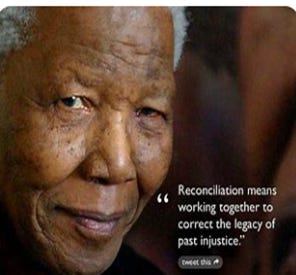
While the terms are sometimes used interchangeably in politics, national reconciliation and national dialogue are distinct in objectives, scope, and process. Generally, national reconciliation is a process aimed at healing historical, social, or political grievances, usually following conflict or systemic marginalization. At its center are to be found healing and forgiveness, social cohesion and trust building, and truth-telling.
National dialogue is more of a structured forum for negotiation and policy discussions. Its objective is more to resolve disputes, build consensus, and define shared objectives. structured forum for political negotiation and policy discussion. Its primary aim is to resolve disputes, build consensus, and define shared objectives for governance or conflict resolution.
Tigray today remains deeply scarred by conflict, displacement, and social trauma. The consequences of war, famine, and destruction continue to shape communities, institutions, and daily life. In this fragile reality, the regional leadership has emphasized reconciliation—a process aimed at healing wounds, restoring trust, and rebuilding the social fabric of the state. This approach differs from the national-level dialogue promoted by the Ethiopian government, which apparently focuses largely on political negotiation and consensus-building across the country.
Several critical considerations emerge. First, the level of understanding among both society and leadership is vital: reconciliation is more than rhetoric; it requires that communities grasp its objectives and have realistic expectations of what it can achieve in practice. Second, the timeframe is constrained by the short tenure of the current regional government, which may have only a year or so in office. This raises questions about continuity and the sustainability of reconciliation mechanisms beyond political cycles.
Third, leveraging traditional mechanisms of conflict resolution is essential. Models such as “Erki-Enderta”, the Enderta Mechanism of Reconciliation, offer culturally grounded approaches that resonate with communities, combining restorative justice, accountability, and social cohesion. Integrating these local practices can enhance legitimacy and effectiveness, particularly in rural and semi-urban areas where formal state institutions have limited reach.
Fourth, there is the matter of alignment with national processes. While the regional initiative operates within Tigray, reconciliation cannot occur in isolation from the rest of Ethiopia. Strategic reflection is needed on how to connect regional reconciliation with national dialogue, so that Tigray’s healing contributes to broader peace and unity, rather than remaining siloed.
Ultimately, as I stated above, Tigray is a society deeply traumatized by war and destruction, and the scars of the past are visible in communities and institutions alike. Facing historical truths, acknowledging grievances, and fostering inclusive reconciliation are essential steps to enable the region to move forward. Only by doing so can Tigray chart a shared future and rebuild trust.